




The 7 greatest Liverpool captains in history, whose names are forever etched into the Anfield turf.


Wearing the captain's armband in professional football is always an honor. But receiving it at Liverpool is something entirely different. Here, the piece of fabric on your left forearm weighs a ton. It's imbued with the expectations of a working-class port city, the incredible pressure of the Kop, and a century-long history of triumph and tragedy.
The 7 greatest Liverpool captains in history, whose names are forever etched into the Anfield turf.
Wearing the captain's armband in professional football is always an honor. But receiving it at Liverpool is something entirely different. Here, the piece of fabric on your left forearm weighs a ton. It's imbued with the expectations of a working-class port city, the incredible pressure of the Kop, and a century-long history of triumph and tragedy.
At Anfield, the captain is no longer just a guy who talks to the referee or flips a coin before kickoff. He becomes the voice of an entire region. Local fans may overlook a lack of talent, technical flaws, or tactical errors. But they will never, under any circumstances, forgive cowardice, indifference, or a lack of courage.
Over the Merseysiders' long history, dozens of outstanding footballers have passed through the club. But only a few have become true leaders, following them through thick and thin. We delved into the archives, recalled great matches, and compiled a list of seven of Liverpool's most outstanding captains—the men who shaped the club's DNA.
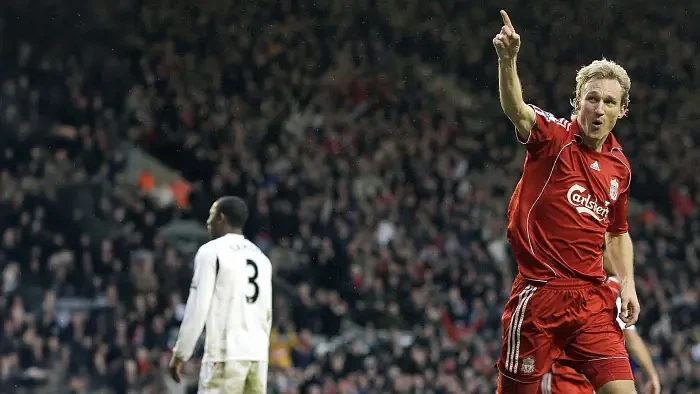
7. Sami Hyypiä: The Icy Calm of the North

The early 2000s. Gerard Houllier is building a new team and brings in a Finnish center-back from humble Dutch side Willem II for a paltry £2.5 million. The English press sneered skeptically: who is this lanky guy? But Sami Hyypiä quickly silenced the doubters, developing into one of the best defenders in Premier League history.
Finn took over the armband in 2001, sharing the leadership burden with the injured Jamie Redknapp. It was under Sami's leadership that Liverpool enjoyed that incredible season, completing a cup treble (UEFA Cup, FA Cup, and League Cup).
Hyypiä broke the stereotypes of British captains. He didn't yell at his teammates with bulging eyes, didn't beat his chest, or make mindless tackles for show. Sami directed the defense like a grandmaster: with perfect reading of the game, positioning, and incredible composure.
But the true proof of his leadership greatness lies elsewhere. In 2003, Gérard Houllier made a difficult decision: handing over the armband to a young Steven Gerrard to give the club a boost. Any other player in the Finn's shoes would have caused a scene, poisoned the dressing room, or demanded a transfer. Hyypiä, however, accepted the decision with absolute aristocratic dignity. He simply continued to cement the defense, became Stevie G's primary mentor, and proved that the armband isn't necessary to lead a team.
6. Ron Yates: The Colossus on Which an Empire Was Built
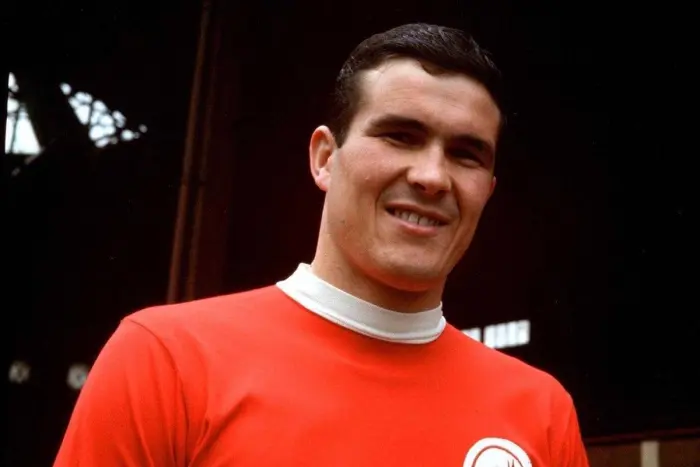
To understand modern Liverpool, you have to go back to the 1960s, when the great Bill Shankly was pulling the team out of the Second Division swamp. And for this dirty, hard work, he needed a man of cast iron on the field. That man was Scotsman Ron Yates.
The story of his signing has long since become folklore. At the new signing's presentation, Shankly, his eyes shining, turned to reporters and uttered the now-legendary phrase: "Just walk around him. He's a colossus! "
Yates was a physical anomaly for his time. Tall and broad-shouldered, he intimidated strikers with just his stern glare. Opponents lost aerial duels to him in the tunnel before entering the field. Ron became the perfect vehicle for Shankly's vision. Together, they propelled the club into the elite of English football, winning two league titles and the first FA Cup in Liverpool's history in 1965. Yates laid the foundation of invincibility upon which the Red Empire would later grow.
5. Alan Hansen: Nerves of Steel and the Pain of a City
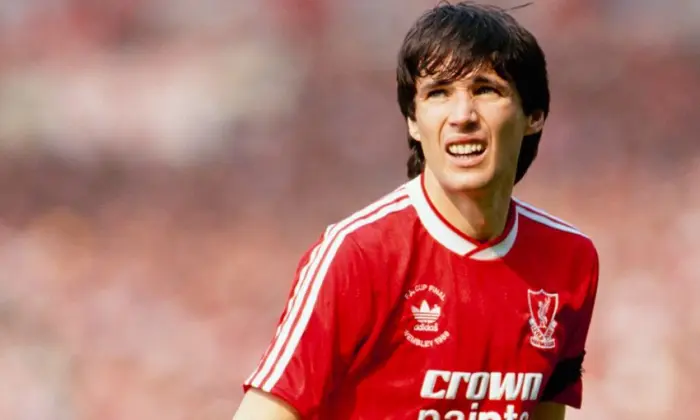
Football in England in the 1980s was a brutal spectacle. Central defenders mostly focused on kicking forwards and carrying the ball into the stands. Scotsman Alan Hansen played a completely different game. He collected the ball, raised his head, elegantly evaded pressure, and delivered subtle passes like an elite playmaker.
Hansen took over the captain's armband in the late 1980s when Kenny Dalglish moved to the bench. Under Alan's leadership, the club churns out trophies, but his main—and most terrifying—mission as captain extended far beyond the pitch.
April 15, 1989. The Hillsborough tragedy. Liverpool fans were killed in a stampede, and the city was plunged into mourning. At that moment, Hansen ceased to be just an athlete. Along with Dalglish, he shouldered an incredible emotional burden: visiting hospitals, comforting families, attending dozens of funerals. He absorbed the pain of the Merseysiders, becoming a true support system for the people during the darkest and most hopeless times in the club's history. Such things are never forgotten.
4. Emlyn Hughes: The Inexhaustible Energy of Crazy Horse
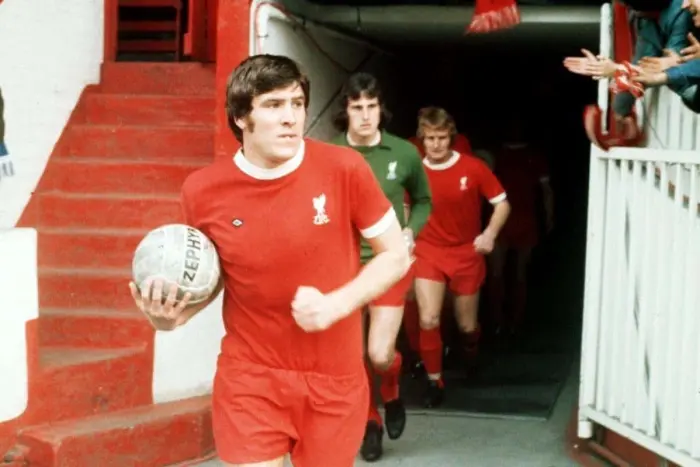
If you need to find the face of Liverpool in the 1970s, the era of Bob Paisley's total dominance in Europe, look no further than Emlyn Hughes.
Fans nicknamed him "Mad Horse" for his utterly insane (in a good way) work ethic. It was as if a nuclear reactor were hidden beneath his shirt. He could sprint from penalty area to penalty area for the entire 90 minutes, managing to work defensively, ignite attacks, and shoot on goal. Hughes began his career in midfield, but later dropped to defense, where his passion inflamed all his teammates.
Emlyn made history as the first Liverpool captain to lift the coveted European Cup in Rome in 1977 (and he did it again a year later). Images of Hughes, with an incredibly wide, childlike smile, hoisting the enormous silver trophy became iconic. At the same time, he was a complex man: for example, Hughes didn't speak to his defensive partner, the stern Tommy Smith, for years. But as soon as they stepped onto the green, personal conflicts disappeared—only blind rage and a thirst for victory remained.
3. Jordan Henderson: The Religion of Hard Work
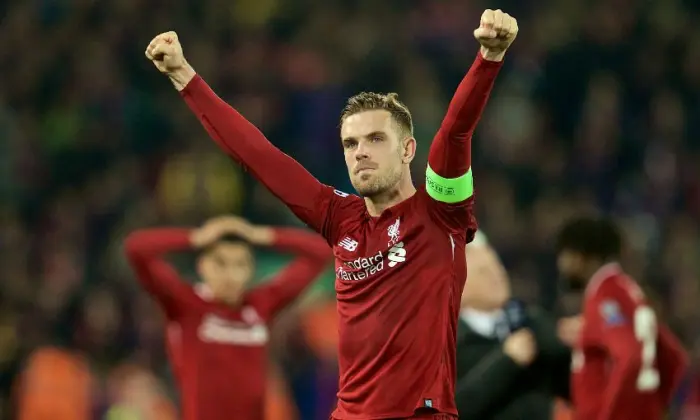
No one in recent football history has faced such a wave of criticism, ridicule, and doubt as Jordan Henderson. Replacing the living deity Steven Gerrard seemed like a suicide mission. Fans scrutinized Jordan's every move, studio pundits openly declared he wasn't up to the level of a top club, and Brendan Rodgers once directly offered him a move to Fulham in exchange for Clint Dempsey.
Most players in his position would have given up and gone off to seek their fortunes at lesser clubs. But Hendo gritted his teeth. He turned down the transfer, hit the gym, and began working harder than anyone else. He didn't have a brilliant radio-controlled pass or a cannonball, but he had a bottomless heart.
When Jürgen Klopp unleashed his famous heavy-metal football with its relentless pressing at Anfield, it was Henderson who became the driving force behind it. He set the rhythm, shouted at his teammates, closed down spaces, and died on the pitch in every match. Ultimately, this guy, mocked by half of England, lifted his sixth European Cup in Madrid. And a year later, he did what even the great Gerrard couldn't – he won the Premier League title, breaking a 30-year drought. His signature sprint before lifting the trophy (the "Hendo shuffle") will forever remain a symbol of Liverpool's renaissance.
2. Graeme Souness: The moustachioed dictator with the touch of an angel
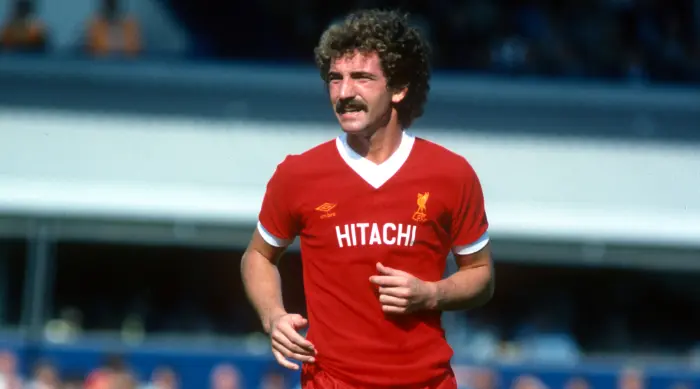
The junction of the 70s and 80s. Imagine a man whose very name makes opposing midfielders gulp nervously even in the tunnel. Graeme Souness was the alpha male of British football, an absolute and unquestionable authority.
He resembled a pub bouncer in appearance: a thick moustache, a ferocious glare, and a readiness to rip off an opponent's legs and the ball at any moment. Souness didn't just play football—he physically and mentally dominated his opponents. If someone from the opposing team dared to commit a foul on a Reds player, he knew Souness would deliver retribution within minutes in the form of a bone-crushing tackle.
But behind this brutal facade lurked a player of phenomenal footballing intelligence. Graham possessed incredible vision, could deliver a brilliant 50-meter diagonal pass, and scored magnificent goals. As captain, he led the team to three European Cups and five league titles. Souness ruled the dressing room with an iron fist, and even the strict Bob Paisley trusted him to resolve internal team issues without the coaching staff's interference.
1. Steven Gerrard: Captain Fantastic
No words are needed here; just the name is enough. Steven Gerrard didn't just play for Liverpool. He was Liverpool for a long decade and a half. A simple Scouser who grew up in the stands of Anfield and made every boy's dream from that grey, rainy city come true.
Unlike captains of the great eras, like Shankly or Paisley, Gerrard often suffered catastrophic bad luck with his teammates. He played for years in frankly mediocre teams, literally dragging his team to finals and snatching trophies against all odds.
Think back to 2004 and the incredible last-minute strike against Olympiacos that saved the club from elimination from the Champions League. Think back to the 2006 FA Cup final against West Ham, when Stevie's legs cramped up from fatigue, but he smashed the ball into the net from 30 meters in injury time.
And, of course, Istanbul. 2005. The final against the mighty Milan, where at halftime, with the score 3-0, many fans turned off their televisions. Gerrard came on for the second half, scored a header, galvanized the crowd with his famous arm gesture, and personally changed the course of football history. During his career, he could have gone anywhere: José Mourinho had been wooing him for years at Chelsea, Real Madrid offered him astronomical contracts and guaranteed trophies. But Gerrard stayed home. He sacrificed easy medals for loyalty to his men. And that's why, for the entire football world, he will forever remain the benchmark for what a true captain should look and act like.
Eras change, tactics become more complex, and football increasingly becomes a cold business. But as long as the anthem "You'll Never Walk Alone" resounds in the Anfield stands, this club will always need a leader with a burning heart. Virgil van Dijk currently bears this heavy burden with honor, adding his last pages to the red annals of history.
Which of the past captains evokes the strongest emotions in you? Whose leadership style do you prefer: Graeme Souness's stern dictatorship, Steven Gerrard's incredible dedication, or Jordan Henderson's hard work, which silenced the haters? Share your thoughts, and let's discuss this great story together!